
Shopify reconciliation and ERP integration, fully automated with Embat
Embat connects Shopify directly to your bank and your ERP, then reconciles every transaction automatically. Payout data flows in real time, each payout is broken down to the transaction, and every entry posts to the right account. Your team reviews the exceptions, not every line.
Trusted by 500+ finance teams across Europe | ISO 27001 & SOC 2 certified

Shopify reconciliation and integration, from a single connection
Whether you need to reconcile Shopify payouts or connect them to your systems, Embat does both from a single integration.
Shopify reconciliation across three layers, fully automated
Bank reconciliation matches two layers: the bank and your ledger. Shopify reconciliation adds a third, the original sale, and must break aggregated payouts into their parts.
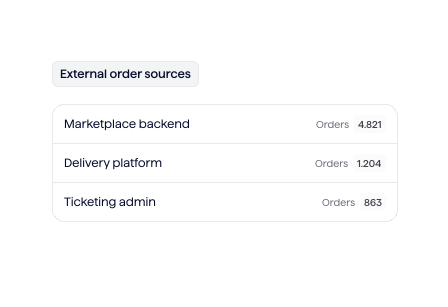
Connect every order to its payout
Embat ingests sales orders from wherever they live, pairs them with Shopify payouts, and traces each one to the net deposit in your bank.
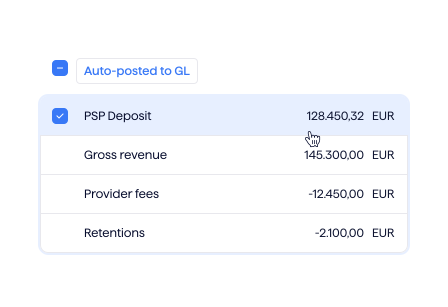
Break down every payout
Each Shopify payout is unpacked into gross revenue, provider fees, retained balance, and net deposit, each posted to the right ledger account.
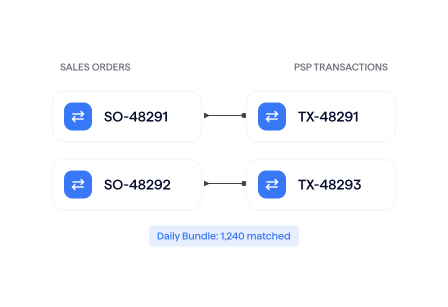
Match automatically by payout ID
Every Shopify transaction carries a payout ID that maps to a sales order. The automatching engine pairs them instantly and groups results into daily bundles.
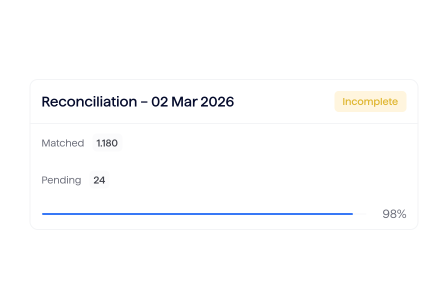
Review only what needs attention
Each day consolidates into a single reconciliation bundle showing matched items, outstanding transactions, and posting readiness, so nothing slips through.
A direct, two-way connection between Shopify, your bank, and your ERP
The same integration that powers reconciliation keeps your systems in sync, in real time rather than overnight batches.
Pull Shopify data in real time
Embat connects directly to Shopify and brings transaction-level data in as it happens, replacing manual report downloads.
Post results straight to your ERP
Bidirectional integration with SAP, NetSuite, Microsoft Dynamics 365 Business Central, and many other systems, sends journal entries, payment statuses, and reconciliation results back automatically.
Keep one source of truth
Balances, transactions, and statuses stay aligned across Shopify, your bank, and your ledger throughout the day, not just at close.
Add banks and systems as you grow
The same connection model extends to new banks, entities, and platforms, so the integration scales with the business.
The intelligence behind Embat
What does TellMe do with your Shopify data?
Everything your finance department needs:
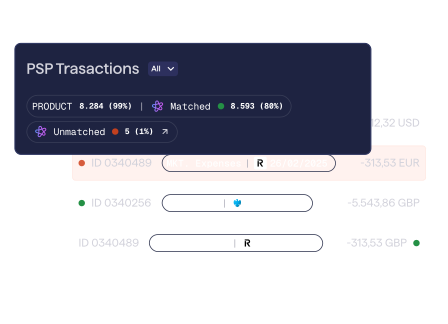
Automatic matching
Automatically match payment gateway transactions to your sales orders
TellMe, the intelligence behind Embat, detects the pattern between each PSP transaction and its corresponding sale, and matches them by ID, amount and date. Your accounting team only sees what actually needs attention.
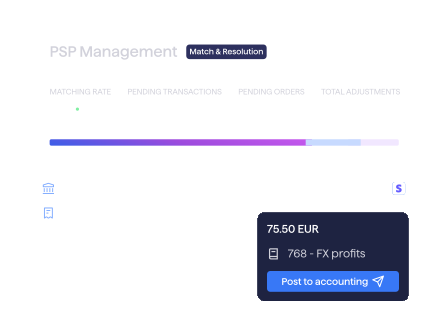
Discrepancy resolution
Resolve PSP discrepancies with intelligent ledger account postings
TellMe analyses the difference when a transaction and a sale share the same ID but the amounts don't align, and suggests a posting against the appropriate ledger account. Every discrepancy becomes a clear, actionable proposal.
What your finance team gets back
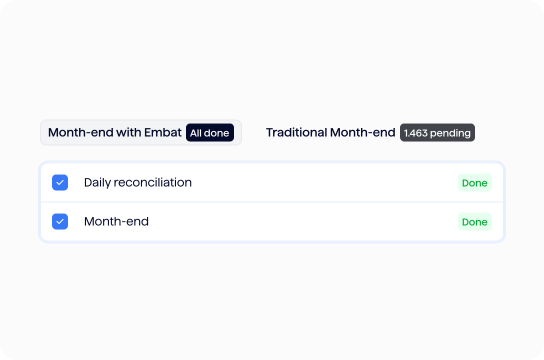
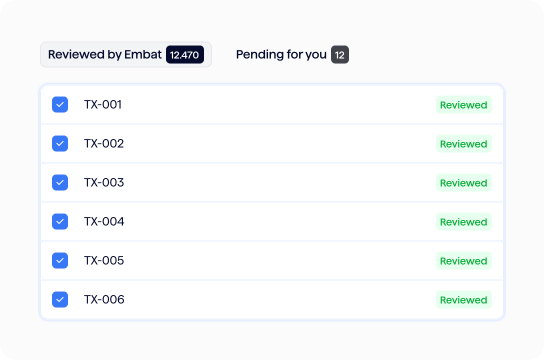
Up to 75% less manual time
Reconciliation and posting that once filled the first days of close run continuously through the month instead.
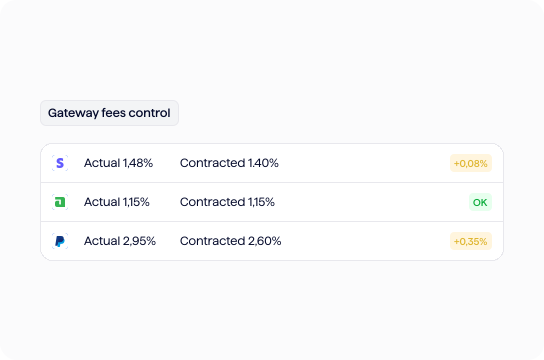
Fee transparency
Know exactly what each gateway costs you per transaction, per provider, per period. Actual fees compared against contracted rates automatically, with discrepancies flagged before they compound.
Scalable operations
Process thousands of daily micro-payments without growing your accounting team. Embat handles the volume; your team handles the exceptions.
Accurate cash position
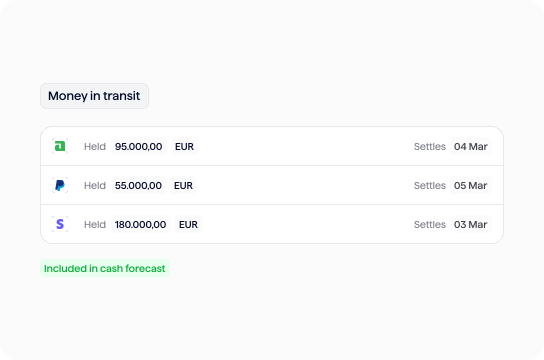
Include in-transit funds in your real-time cash position. Know how much each PSP holds and when it will settle, improving your forecasting accuracy and liquidity decisions.
One reconciliation flow,
every gateway









Ready to transform your treasury operations?
Book a demo tailored to your specific challenges and see how Embat can transform your finance operations in weeks, not months.
Frequently asked questions
Bank reconciliation matches two layers: the bank statement and the general ledger. Shopify reconciliation adds the sales order as a third layer and must break aggregated payouts into individual transactions, separating processing fees, refunds, and chargebacks before the net amount is matched against the bank deposit. This is why a spreadsheet approach breaks down at volume.
Embat connects directly to Adyen and pulls transaction-level data in real time, then posts reconciliation results to your ERP through bidirectional integration with SAP, NetSuite, Sage Intacct, Business Central, and many other systems. Journal entries and payment statuses sync back automatically, keeping every system aligned without manual re-keying.
Yes. It is a pre-accounting process that feeds Embat's accounting module. Once sales, Shopify transactions, and bank payouts are matched, Embat generates bundles with the full breakdown, and these post to your ERP. The returning entry confirms the posting in Embat, keeping bank and ledger balances aligned.
Sales orders often sit outside the ERP, in a marketplace backend, an ecommerce platform, or a ticketing system. Embat's public API connects to wherever they are and brings them into the reconciliation flow alongside Shopify and bank data.