
Payment execution across every bank and format from one platform
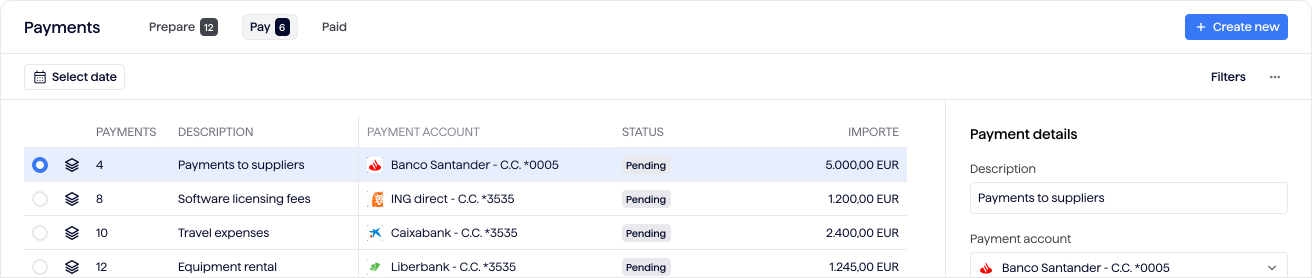
Prepare, validate, and send payments through direct bank connections: Corporate API, H2H, EBICS, SWIFT, or EDITRAN — without logging into each portal separately. Track every payment in real time from submission to bank confirmation, and reconcile automatically against your ledger. Files are generated automatically within the platform so no one downloads, manipulates, or uploads payment data between your ERP and the bank.
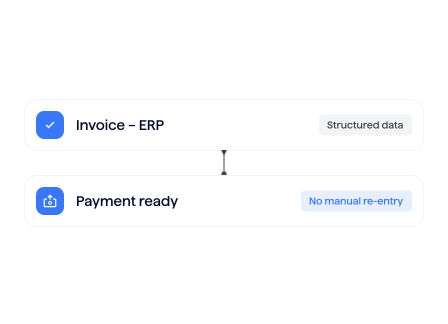
Prepare, validate, execute, and reconcile payments in one connected flow
Payment data pulls directly from your ERP with full invoice context
Every payment starts with structured data (supplier, amount, currency, due date, bank details) sourced from your ERP. No manual re-entry into banking portals, no formatting errors from copy-pasting between systems.
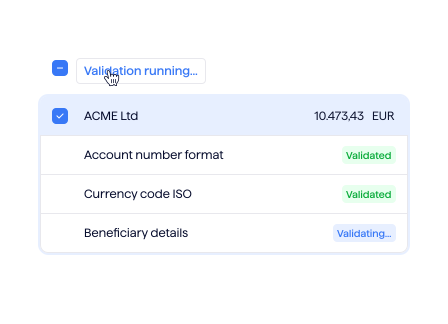
Data validation catches errors before files reach your bank
Consistency checks verify account numbers, currency codes, beneficiary details, and file format compliance before generating the payment file. Rejected files and rework cycles drop because faulty data never leaves the platform.
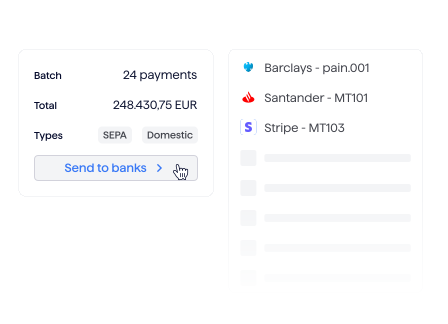
One interface sends payments through all your bank connections
SEPA transfers, domestic payments, and international wires execute through direct bank connections from a single screen. Each bank receives files in its required format: pain.001, MT101, MT103, generated automatically within the platform.
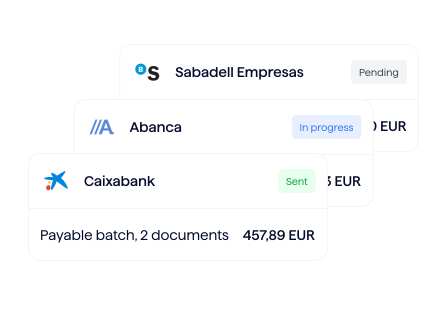
Real-time status tracking shows exactly where each payment stands
Every payment carries a live status (pending approval, pending execution, in progress, complete, or failed) with bank confirmations flowing back automatically. No more checking each portal to verify whether a batch was processed or rejected.
Post-execution reconciliation matches confirmations to your ledger
Bank confirmations match against the original payment file and your GL entries. Journal entries post to your ERP, documents liquidate, and the reconciliation trail completes from invoice to bank statement without manual steps.

Every payment channel and format, managed from one platform
Secure transmission of external payment files
For files generated outside Embat (payroll from HR systems, tax remittances, direct debits), blind file transmission sends the file to your bank through the same secure channel and approval workflow. The file content is never extracted or displayed, protecting sensitive data like salary details.
Automatic file generation
Payment files generate in each bank's required format — pain.001, MT101, MT103, or local standards. Backend generation eliminates the manual export-and-upload step where files are most vulnerable to manipulation.
Real-time balance visibility
Check available balances across all accounts before executing payments. Cash position updates reflect pending outflows, so payment decisions account for actual liquidity, not stale portal data.
Ad-hoc payment execution
Execute urgent or one-off payments directly from the platform without preparing a full batch. Same validation, same approval workflow, same traceability — just faster for time-sensitive transfers.
The measurable impact of centralised payment execution
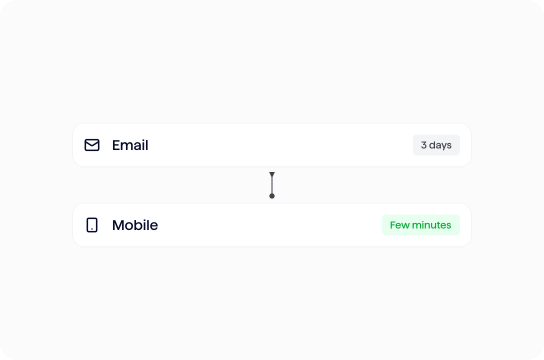
Approvals in minutes, not days
Payments that previously circulated via email for 2–3 days reach the right approver instantly with full context. Signature cycles compress from days to minutes when approvers have mobile access.
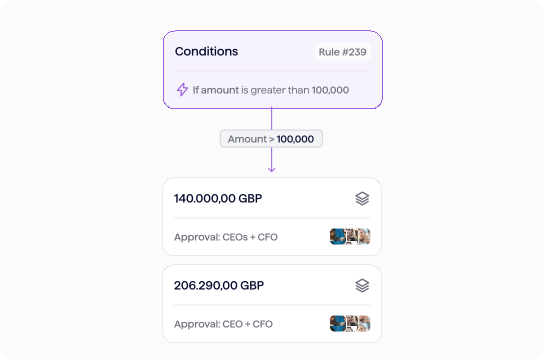
Zero unauthorised payments
Every payment passes through the defined approval chain before execution. The platform enforces your governance policies consistently across all entities and payment types.
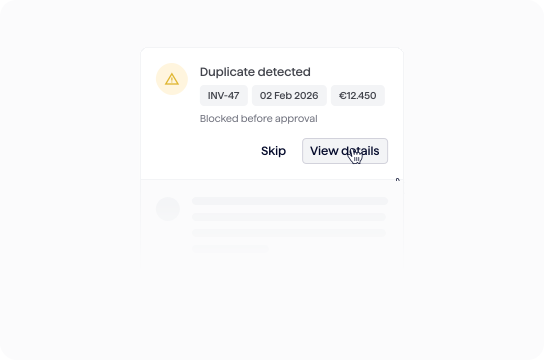
Duplicate invoices caught before approval
Detection runs against the full invoice history, flagging duplicates before they enter the approval queue. Errors that traditionally surface at month-end are prevented at source.
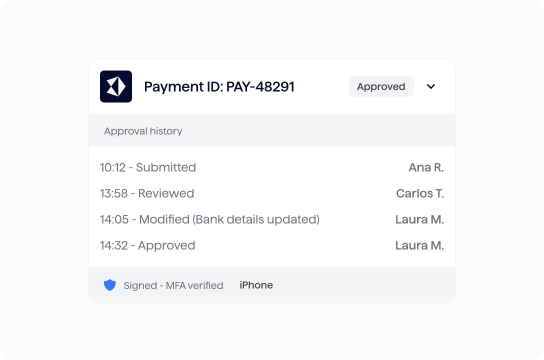
Complete audit trail per payment
Auditors access one record per payment showing every approval decision, rejection, modification, and signature. No reconstruction required from email archives, bank logs, or spreadsheet annotations.

Ready to see what an Intelligent Treasury can do for you?
Book a demo tailored to your specific challenges and see how Embat can transform your finance operations in weeks, not months.
Frequently Asked Questions (FAQ)
Corporate API is a direct certified connection between a treasury platform and the bank's infrastructure, designed for corporate payment operations — file transmission, status tracking, balance queries. Open Banking (PSD2) was designed for consumer account access and payment initiation with different security and volume characteristics. For corporate treasury, Corporate API provides the reliability, format flexibility, and throughput that Open Banking was not built to deliver.
At minimum: pain.001 (ISO 20022 XML) for SEPA transfers, MT101 for payment initiation via SWIFT, and MT103 for individual international wires. Local standards matter too — EDITRAN in Spain, EBICS in DACH markets. The critical capability is automatic format generation: the platform should produce the correct file for each bank and payment type without manual configuration or export steps.
The rejection reason and error code should flow back into the platform automatically, linked to the specific payment. Your team corrects the issue — wrong IBAN, format mismatch, insufficient balance — and resubmits without recreating the payment from scratch. Platforms that lack automatic status feedback force you to discover rejections by logging into the bank portal, often days later.
Yes, if the platform supports blind file transmission. For files generated by HR or tax systems, the platform should transmit the file to the bank through the same secure channel and approval workflow — without reading, modifying, or displaying its contents. This protects sensitive data like individual salaries while maintaining a single audit trail for all outgoing payments.
When a platform generates payment files internally and transmits them directly to the bank, no one in the organisation downloads, opens, or re-uploads the file. This eliminates the manual handoff where files are most vulnerable to interception or manipulation. Combined with beneficiary validation against ERP master data, it closes two of the most common corporate payment fraud vectors.