
Payment approval workflows that enforce your governance without slowing your team
Define who approves what — by amount, entity, payment type, or any rule your governance requires. Approvers see full invoice context on desktop or mobile, sign with double authentication, and reject individual items without blocking the batch. Every decision is logged with timestamp, user, and device for complete audit traceability.
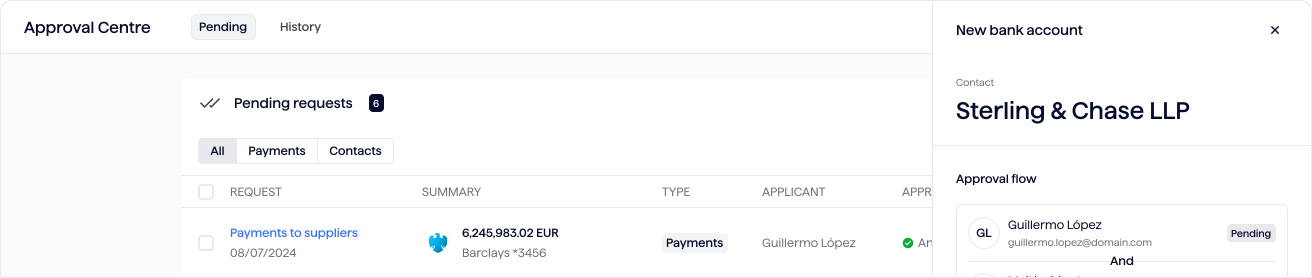
Structured payment approval from request to signature
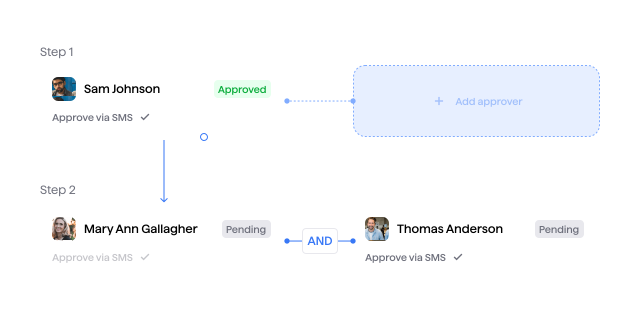
Approval rules match your governance structure exactly
Configure approval logic by amount thresholds, legal entity, payment type, currency, or any combination. Joint signatures, tiered limits, and entity-specific rules map directly to your internal policies — no workarounds needed.
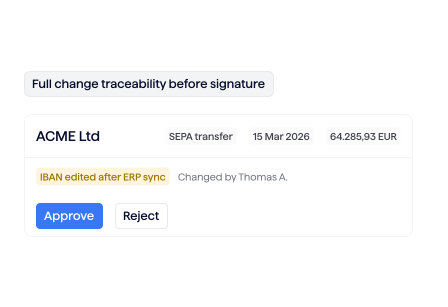
Approvers see full payment context before signing
Each approval presents the complete invoice chain — supplier, amount, due date, bank details, and payment method. If anyone edited beneficiary data after it left the ERP, the approver sees a warning banner showing exactly what changed and who changed it.
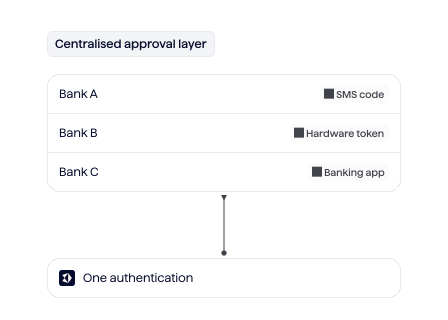
One authentication replaces every bank portal, hardware token, and signing device
Without centralised approvals, every bank requires its own authentication method — crypto calculators, apps, SMS codes — and each entity at each bank means a separate signing session. One double authentication covers all banks, all entities, all payment types.
Review and sign from desktop or mobile with double authentication
Payments route to the right approver automatically. Sign from any device with the same double authentication — no dedicated hardware tokens, no bank-specific signing devices, no VPN requirements.
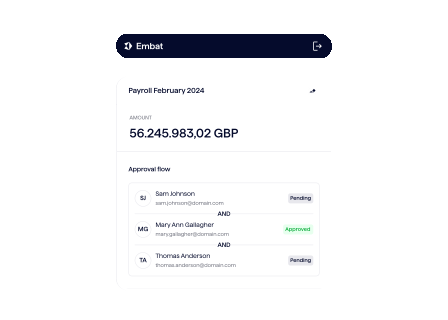
Reject individual invoices without blocking the entire batch
Reject a single invoice from a batch without holding up the rest. Approved payments execute immediately; the exception routes back for correction on its own.
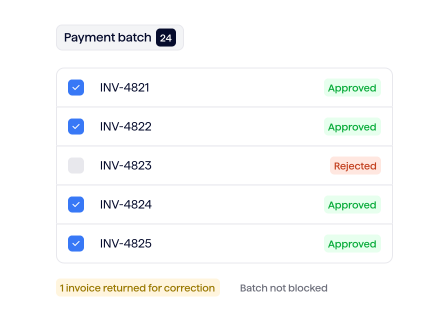
Every approval action creates an immutable audit record
Timestamp, user identity, device, and decision — every action in the approval chain is logged permanently. Compliance teams and auditors access a single trail instead of reconstructing authorisation history across email threads and bank logs.
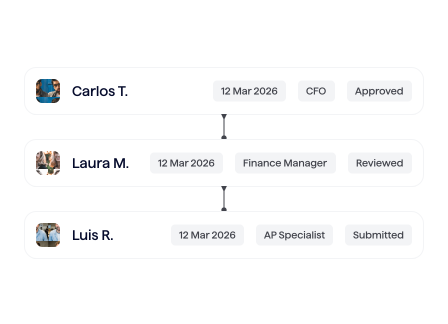
Full governance control without manual overhead
Approval access for any stakeholder
Extend signing rights to budget owners, regional managers, or department heads without IT involvement. Any stakeholder can review and authorise payments within the limits your governance structure defines.
Expense and payment approval combined
Route both expense approval and payment authorisation through the same workflow. One process handles the full chain from invoice receipt to payment execution, eliminating the handoff between systems.
Approve from any device
Review full invoice context and sign payments from desktop or mobile with multi-factor authentication. Approvers act on pending items without waiting to be at their desk.
Multi-entity governance
Manage approval policies for all your legal entities from one central configuration. Each entity follows its own rules while finance leadership maintains visibility and control across the group.
The measurable impact of structured approval workflows
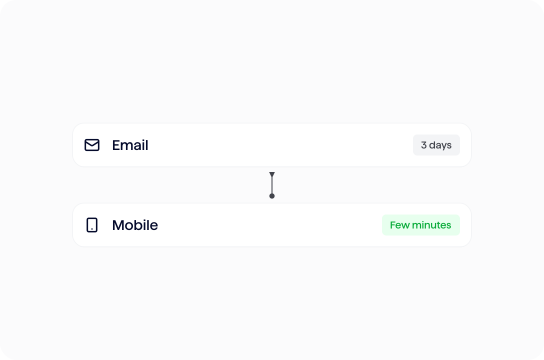
Approvals in minutes, not days
Payments that previously circulated via email for 2–3 days reach the right approver instantly with full context. Signature cycles compress from days to minutes when approvers have mobile access.
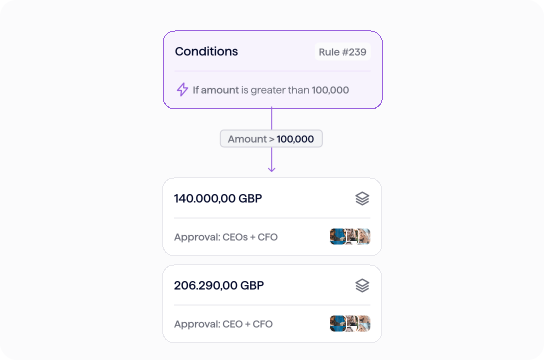
Zero unauthorised payments
Every payment passes through the defined approval chain before execution. The platform enforces your governance policies consistently across all entities and payment types.
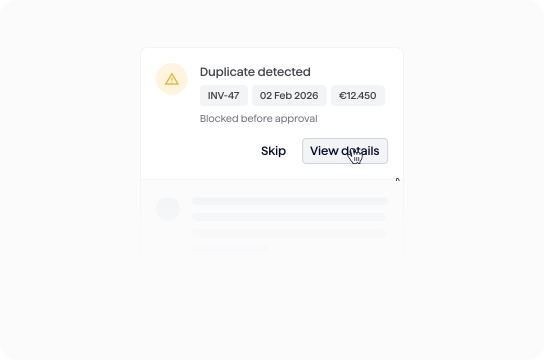
Duplicate invoices caught before approval
Detection runs against the full invoice history, flagging duplicates before they enter the approval queue. Errors that traditionally surface at month-end are prevented at source.
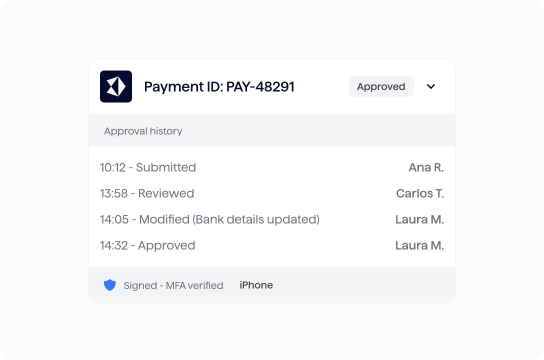
Complete audit trail per payment
Auditors access one record per payment showing every approval decision, rejection, modification, and signature. No reconstruction required from email archives, bank logs, or spreadsheet annotations.

Ready to see what an Intelligent Treasury can do for you?
Book a demo tailored to your specific challenges and see how Embat can transform your finance operations in weeks, not months.
Frequently Asked Questions (FAQ)
A payment approval workflow defines who must authorise each payment before it reaches the bank — based on amount, entity, payment type, or any combination your governance requires. Without one, companies rely on email chains, PDF printouts, or verbal confirmations that leave no audit trail. The workflow is your enforcement mechanism: it guarantees that every payment follows your internal policies consistently, regardless of who initiates it.
Four things: configurable rules (not one-size-fits-all), mobile signing capability, individual invoice rejection within batches, and a complete audit trail per payment. The first ensures the system matches your governance structure. The second prevents approval bottlenecks when signatories travel. The third means one problematic invoice never blocks the rest of a payment run. The fourth gives auditors a single record to review instead of reconstructing decisions from email archives.
Each entity should follow its own approval rules while finance leadership maintains central visibility. A good platform lets you configure different policies per entity — different signatories, different thresholds, different escalation paths — managed from one central console. The alternative is maintaining separate approval processes per entity, which creates inconsistency and makes group-level oversight nearly impossible.
Delegation rules and escalation paths should be configured in advance. When the primary approver is out, the platform routes the payment to the designated delegate or escalates after a defined period. The key is that this happens within the system with a full audit trail — not through informal arrangements where someone else uses the approver's credentials or bypasses the workflow entirely.
Structured approval workflows accelerate close because every payment already carries its complete authorisation record. Auditors and controllers don't need to reconstruct who approved what from email threads or bank logs. The reconciliation loop also benefits: approved payments that execute and settle carry a clean trail from invoice to GL posting, reducing the manual matching burden at period end.