
Complete enterprise debt management in a single platform
Gain full visibility and control over current and future debt obligations. Centralises your entire debt portfolio, automates amortisation schedules, tracks variable rates in real-time, and syncs GL postings to your ERP automatically. Ensure compliance with agreed financial conditions and lender commitments.
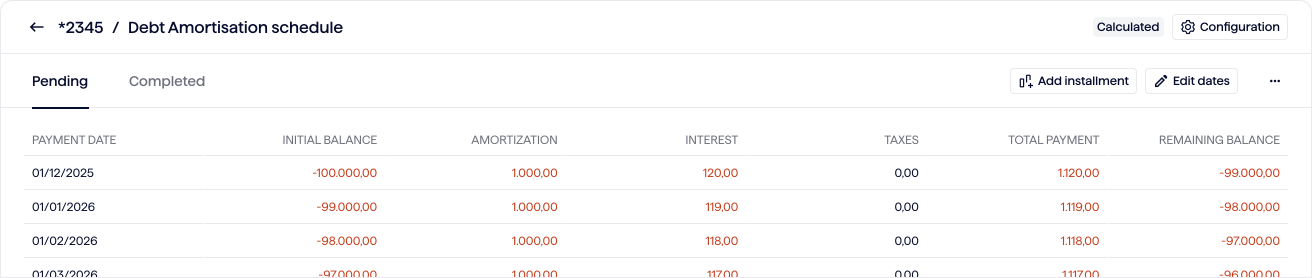
Complete debt management from setup to reconciliation
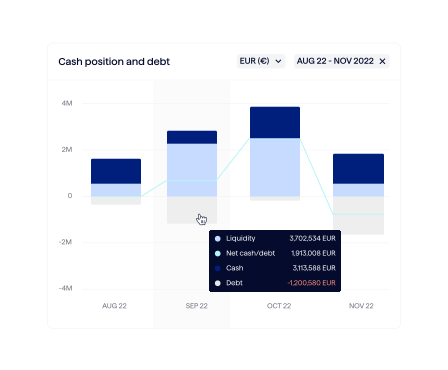
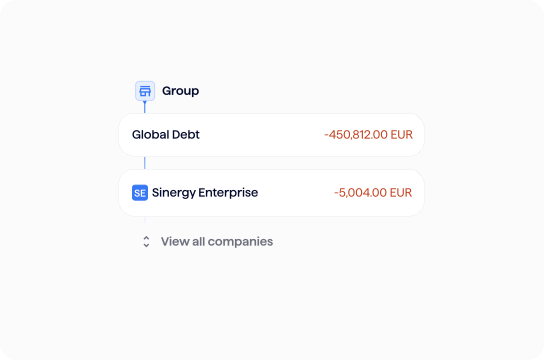
Centralised debt portfolio across all entities and banks
Every instrument in one view — loans, credit lines, leasing, and renting agreements across every entity and bank. Outstanding balances, upcoming payments, and maturity dates update as transactions flow in from connected accounts.
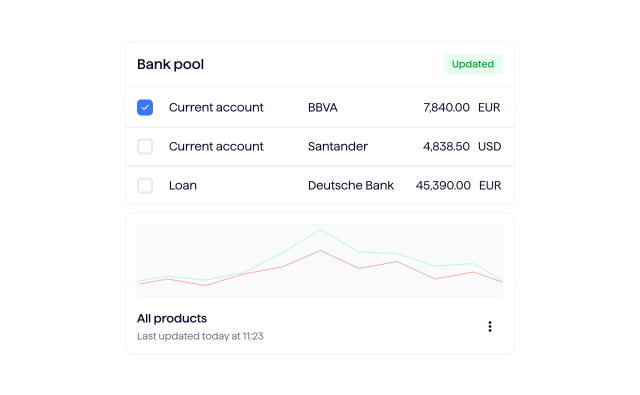
Automated monitoring of banking facilities with charge reconciliation against agreed terms
Each repayment that hits the bank account matches against the amortisation schedule automatically. Discrepancies between expected and actual charges surface instantly, ensuring banks are charging exactly what was agreed.
Automatic updates of amortisation schedules and variable interest rates from live market data
Fixed-rate schedules import in minutes. Variable-rate instruments track EURIBOR and €STR automatically — when a reset date arrives, the schedule recalculates interest for all outstanding periods without manual intervention.
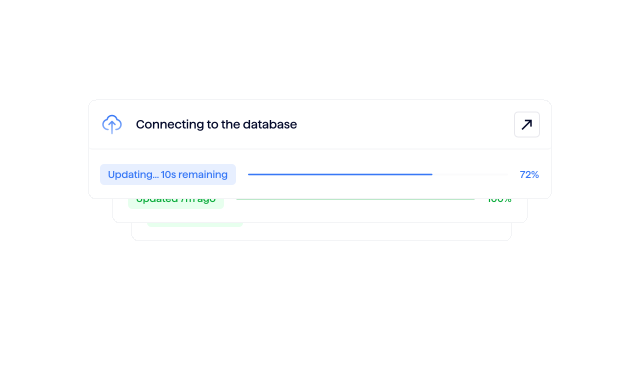
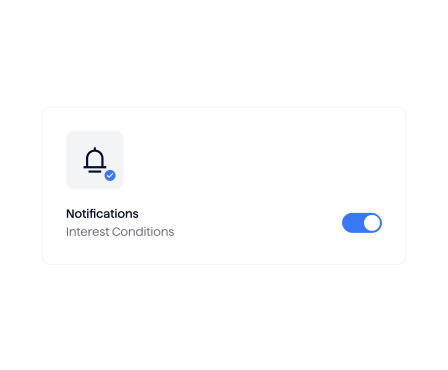
Smart alerts for upcoming maturities and interest rate review dates
Upcoming maturities, rate resets, and payment clusters surface before they require action. Finance teams plan refinancing conversations and allocate liquidity ahead of time instead of reacting to surprises.
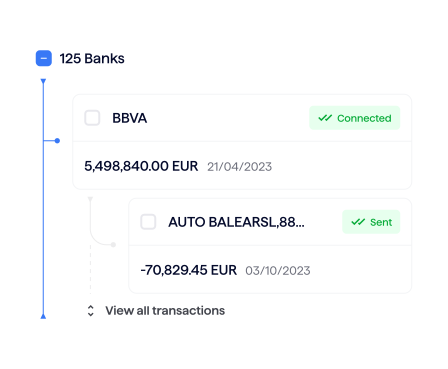
Real-time connectivity with over 15,000 financial institutions for accurate debt data
Direct API connections pull transaction data from every connected bank automatically. Debt charges, repayments, and fee movements arrive in real time — eliminating the daily routine of logging into portals and downloading statements.
Seamless ERP integration that eliminates manual accounting entries
GL postings generate automatically for every reconciled payment, splitting principal, interest, and tax across configured accounts. Reconciliation results and updated payment statuses sync bidirectionally with your ERP.
Full-cycle debt automation from instrument setup to ERP posting
Complete instrument coverage
Loans, credit lines, leasing, renting, and bullet structures managed under one unified framework. Fixed and variable rate instruments supported natively.
Verified charges and expense tracking
Every bank charge reconciles against agreed terms automatically. Principal, interest, and tax split across configured GL accounts — incorrect fees are caught, not absorbed.
Forward-looking debt visibility
Maturity ladders, total exposure, and debt-related outflows feed directly into rolling cash flow forecasts. Debt walls become visible before they create liquidity pressure.
Audit-ready debt records
Every schedule, reconciliation, and GL posting is timestamped and traceable. Full audit trail from instrument setup through every payment and accounting entry.
Elevate your team from data entry to strategy
Real-time visibility and control
Instant access to all debt positions, improving financial planning and execution of funding strategies.
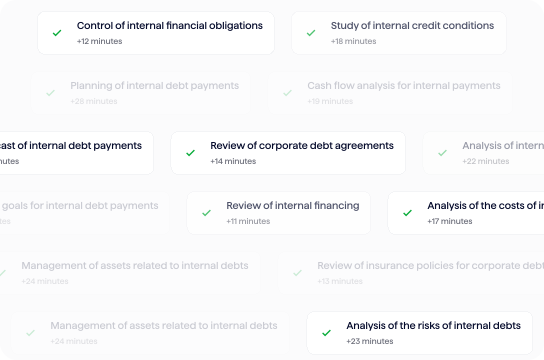
Automation and accuracy
Reduction of manual tasks through automated banking facility updates and debt tracking, minimising errors in reconciliations and reporting.
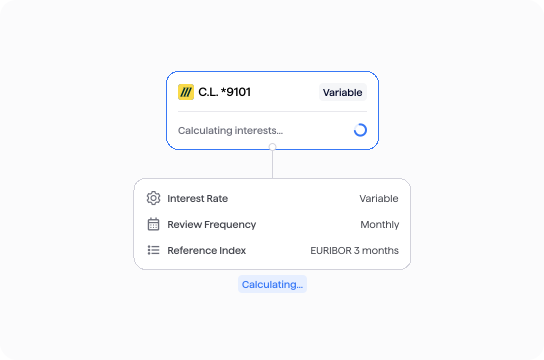
Greater confidence in financial data
Automation ensures accurate and reliable financial records, facilitating audits and enhancing data quality.
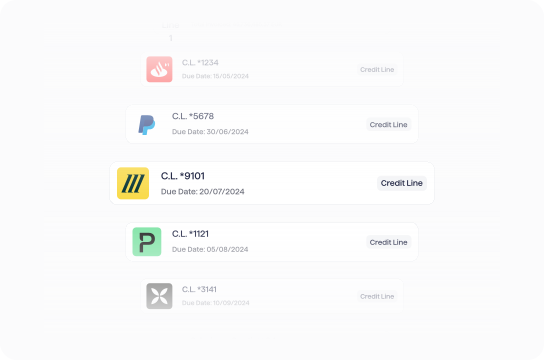
Efficient maturity and capital structure management
Proactive tracking of debt maturities and adjustments to capital structure based on strategic needs.
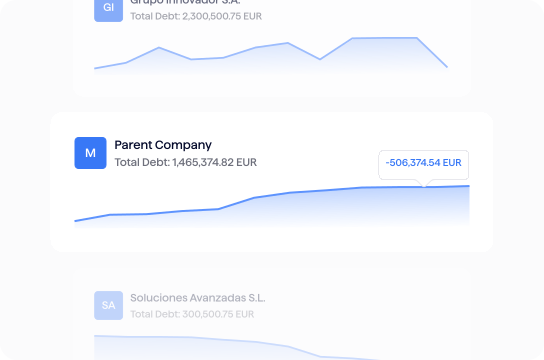
Optimised cash flow management
Integration of debt obligations into treasury forecasts for improved financial planning and liquidity optimisation.

Ready to transform your treasury management?
Automate, centralise, and make smarter decisions in real time. See how Embat can save your finance team up to 75% of their time, reduce errors, and boost productivity.
Frequently Asked Questions (FAQ)
When you configure a debt instrument, you identify the repayment account and provide a sample transaction description. As bank charges arrive, the platform matches them against the amortisation schedule automatically. If the amount matches, the reconciliation completes and the GL entry posts. If there is a discrepancy — for example, the bank applied a different daycount convention — it is flagged immediately for your review, eliminating the manual investigation that typically follows each mismatch.
Yes. The platform supports both fixed and variable rates. For variable instruments, it pulls live market data — EURIBOR 1M, 3M, 6M, 12M, and €STR — and automatically recalculates the schedule based on your specific reset frequency and spread. When a reset date arrives, all outstanding periods update without manual intervention, ensuring your forecasts and accounting entries reflect the latest rate.
Yes. For fixed-rate instruments or loans with custom structures, you can copy and paste schedules directly from Excel into the setup wizard. This covers the full amortisation table — dates, principal, interest, and tax components. For variable-rate instruments, configuring directly on the platform is recommended so that rate resets update automatically.
Yes. Leasing and fixed-payment agreements are managed as debt products with their own amortisation schedules, reconciliation rules, and accounting entries. The platform tracks recurring charges, splits principal and interest for GL posting, and integrates all lease-related outflows into the cash flow forecast automatically.
Every amortisation schedule generates corresponding forecast entries in the cash flow module automatically. When loan terms change — an updated interest rate, an extended maturity, or a new instrument added — the forecast updates in real time. This gives your treasury team full visibility on upcoming debt walls, periods where multiple payments cluster, and the liquidity needed to service all obligations without surprises.